
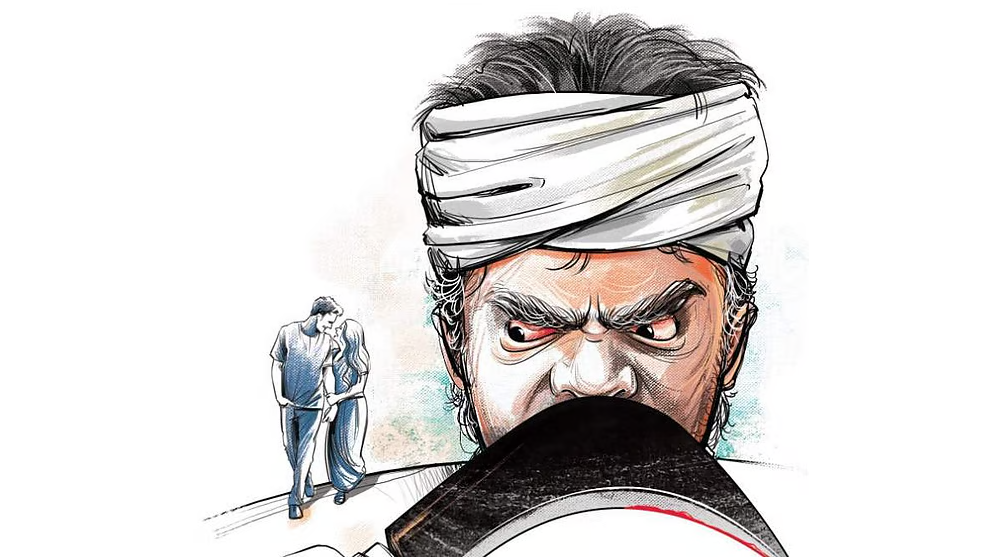
In a country that celebrates the ideals of unity in diversity, the occurrence of honour killings is a brutal reminder of the contradictions within Indian society. An honour killing refers to the murder of a family member — usually a woman — who is perceived to have brought shame to the family by defying societal norms, particularly in matters of love, marriage, or personal autonomy. These crimes are often rooted in patriarchy, caste rigidity, and community honour, where personal choices are deemed secondary to collective reputation.
The nature of honour killings in India is deeply gendered and patriarchal. Most victims are young women who dared to love across caste or religious lines, or simply asserted their right to choose their life partner. Often, the male partner is also targeted, especially if he belongs to a lower caste or minority religion. These killings are not random acts of violence but are often meticulously planned and socially sanctioned. In many cases, the crime is committed with the approval or even direction of family elders or community bodies such as Khap Panchayats, which function as extra-constitutional village councils in parts of northern India.
Honour killings are more prevalent in the northern and northwestern states of India, including Haryana, Punjab, Rajasthan, Uttar Pradesh, and Bihar. These regions have strong caste hierarchies and tightly knit rural communities that enforce rigid codes of social conduct. However, the phenomenon is not confined to the north. In southern states like Tamil Nadu and Karnataka, increasing urbanization and inter-caste relationships have led to a rise in such killings. Even in relatively progressive states like Kerala and Maharashtra, there have been cases where inter-religious marriages have provoked fatal responses from families. According to the National Crime Records Bureau (NCRB), 25 cases of honour killing were officially recorded in 2021. However, civil society groups argue that this is a gross underestimation, as many cases are falsely reported as suicides or generic murders to avoid stigma and legal scrutiny. A report by the NGO Shakti Vahini noted over 500 cases in Haryana alone over the past decade.
The causes of honour killings are multidimensional. At the heart lies the intersection of casteism and patriarchy. Marriages that violate caste boundaries, especially when a woman from an upper caste marries a lower-caste man, are viewed as a threat to the family's social standing. Similarly, inter-religious relationships — particularly those between Hindu women and Muslim men — are vilified under communal narratives like “love jihad,” further inflaming social tensions. Patriarchy, too, plays a central role. Women's sexuality and marital choices are seen as the property of the family or community, and any deviation is interpreted as rebellion. The role of Khap Panchayats is particularly disturbing. These bodies, dominant in Haryana and western Uttar Pradesh, often issue dictates prohibiting same-gotra marriages or inter-caste unions and actively promote social ostracism or even murder as punishment.
There are several deeply concerning case studies that highlight the brutality of honour killings. One of the most well-known is the Manoj-Babli case of 2007 in Haryana. The young couple, who belonged to the same gotra (clan) and married against the wishes of their families and the Khap Panchayat, were abducted and murdered. In a rare legal victory, a court sentenced five people to death and life imprisonment for others, including the Khap head, marking the first time such community leaders were held accountable. In Tamil Nadu, the 2016 murder of Sankar, a Dalit man, who had married an upper-caste woman named Kausalya, was caught on CCTV. The woman’s father was found guilty of orchestrating the killing. These cases, while shocking, are only the tip of the iceberg. Countless others go unreported, buried in silence, fear, and community complicity.
The negative impact of honour killings on Indian society is severe. They not only rob individuals of their right to life and liberty but also reinforce regressive societal norms that contradict constitutional values of equality, dignity, and freedom. These killings perpetuate caste-based discrimination, reinforce patriarchy, and create an environment of fear for young people seeking to exercise autonomy in personal matters. For women, especially, they signal a chilling message: that asserting agency over one’s body and choices can be fatal.
Legally, honour killings are treated under the Indian Penal Code (IPC) as murder (Section 302). However, there is no separate provision that classifies or punishes honour killing as a distinct offence. This creates loopholes in both investigation and prosecution. Often, police officers, influenced by local social norms, fail to register such cases properly or delay investigation. Recognizing this gap, the Law Commission of India (Report No. 242, 2012) recommended a separate law to deal with honour crimes, proposing community conspiracy be made punishable. In 2019, the Supreme Court in Shakti Vahini v. Union of India ruled that inter-caste or inter-faith marriages are constitutionally protected, and any attempt by community or Khap Panchayats to stop consenting adults from marrying is illegal. The Court issued detailed guidelines, instructing state governments to set up safe houses for couples and take preventive measures. Despite these efforts, implementation remains weak.
From a legal standpoint, the Special Marriage Act (1954) offers a framework for inter-caste and inter-religious marriages without requiring religious conversion. However, procedural hurdles — such as a 30-day public notice period — often expose couples to danger from families or vigilantes. Recent efforts in states like Rajasthan, where the government proposed a law against honour killings, offer hope, but broader reforms are needed across India.
In conclusion, honour killings represent one of the most brutal forms of violence stemming from caste, religion, and patriarchy. They are not isolated incidents but symptoms of a deeply flawed social order that places family reputation above human rights. Tackling this requires a multi-pronged approach — legal reform, police accountability, gender sensitization, and mass awareness. Most importantly, it requires a collective shift in societal attitudes to place individual rights above caste honour and patriarchal pride. Until then, the cost of love — particularly for young women — may continue to be paid in blood.