Why in the news?
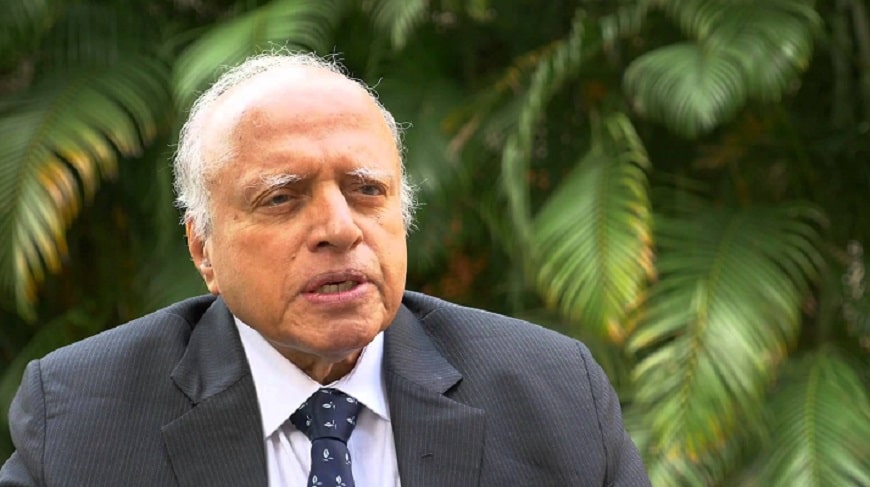
- August 7 marks the birth anniversary of M.S. Swaminathan. While addressing the M.S. Swaminathan Centenary International Conference in New Delhi , Prime Minister Narendra Modi emphasised that the interests of farmers are the highest priority of the government in the wake of additional tariffs imposed by the USA.
- Hailed as the father of India’s Green Revolution, Swaminathan passed away on September 28, 2023, at the age of 98. In 2024, he was conferred the Bharat Ratna posthumously. For his visionary leadership that propelled the Green Revolution to success, he was recognised as “Father of Economic Ecology” by the United Nations Environment Programme.
Key Takeaways:
1. Monkomb Sambasivan Swaminathan was born on August 7, 1925, in Kumbakonam, Tamil Nadu. Upon seeing the impact of the Bengal famine of 1942-43, he decided to change his subject from medical to agriculture.
2. He said, “And, I also decided to go into agricultural research, and that too in genetics and breeding, for the simple reason that a good variety has the largest impact. A large number of farmers, whether small or large, can benefit from a good strain of a crop. I also got fascinated with the science of genetics as a whole.”
3. He played a major role in the set of changes introduced in farming in the 1960s and ‘70s that helped India achieve food security. In 1954, he started working at the Central Rice Research Institute, Cuttack, on transferring genes for fertiliser response from Japonica varieties to Indica varieties. He described this as “The first attempt to develop high yielding varieties which can respond to good soil fertility and good water management.”
4. This was needed because post-independence, Indian agriculture was not very productive. Years of colonial rule impacted its development and the nation lacked the resources to modernise the sector. As a result, crops necessary for staple foods also had to be imported from countries like the US.
5. He was convinced of the need for breeding semi-dwarf varieties responsive to fertiliser application. The problem with the traditional wheat and rice varieties was that they were tall and slender. These ‘lodged’ – fell flat on the ground — when they grew and their earheads were heavy with well-filled grains produced in response to high fertiliser doses.
6. His strategy of developing semi-dwarf wheat varieties using mutagenesis — exposing plants to chemicals or radiation to introduce desirable modifications in their DNA — did not work. The search for an ideal variety led him to contact American scientist Orville Vogel, which led him to Prof. Norman E. Borlaug, Director of International Maize and Wheat Improvement Center (CIMMYT), Mexico.
7. Swaminathan also worked in mangrove restoration and preservation of coastal land in Kendrapara district of Odisha for around 12 years since 1994. In 1999, he introduced the concept of trusteeship management of biosphere reserves.
8. He implemented the Gulf of Mannar Biosphere Reserve Trust with financial support from the Global Environment Facility (GEF). Following the 2004 Indian Ocean earthquake, he advised India to plant new mangroves along the shoreline to minimise damage from future tsunamis.
9. As the head of the National Commission on Farmers from 2004-06, he recommended that the Minimum Support Price at which farmers sell their crops to the government should be at least 50 per cent more than the weighted average cost of production.
The side effects of the Green Revolution
1. Despite its landmark role in achieving food sufficient in India, the Green Revolution has been criticised on multiple counts, such as benefiting the already prosperous farmers as it was introduced in states with higher productivity.
2. Expressing his concern over indiscriminate pumping of groundwater in Punjab, Swaminathan in 2019 in his piece of advice for successive governments, had said: “The groundwater situation in the Punjab is not good. Free electricity or low cost electricity should be avoided, since this promotes excessive pumping of groundwater. I have high regards for Punjab farmers.”
3. On the possibility of ushering ‘second green revolution’, he had said, “The term I prefer to use is evergreen revolution which is very much possible if Punjab focuses on two things- farm economics and farm ecology. Improving yield per hectare without ecological harm is the challenge and that is what I call evergreen revolution.”