Leaderboard

Login to view leaderboard.

AI
Aeon IASa year ago

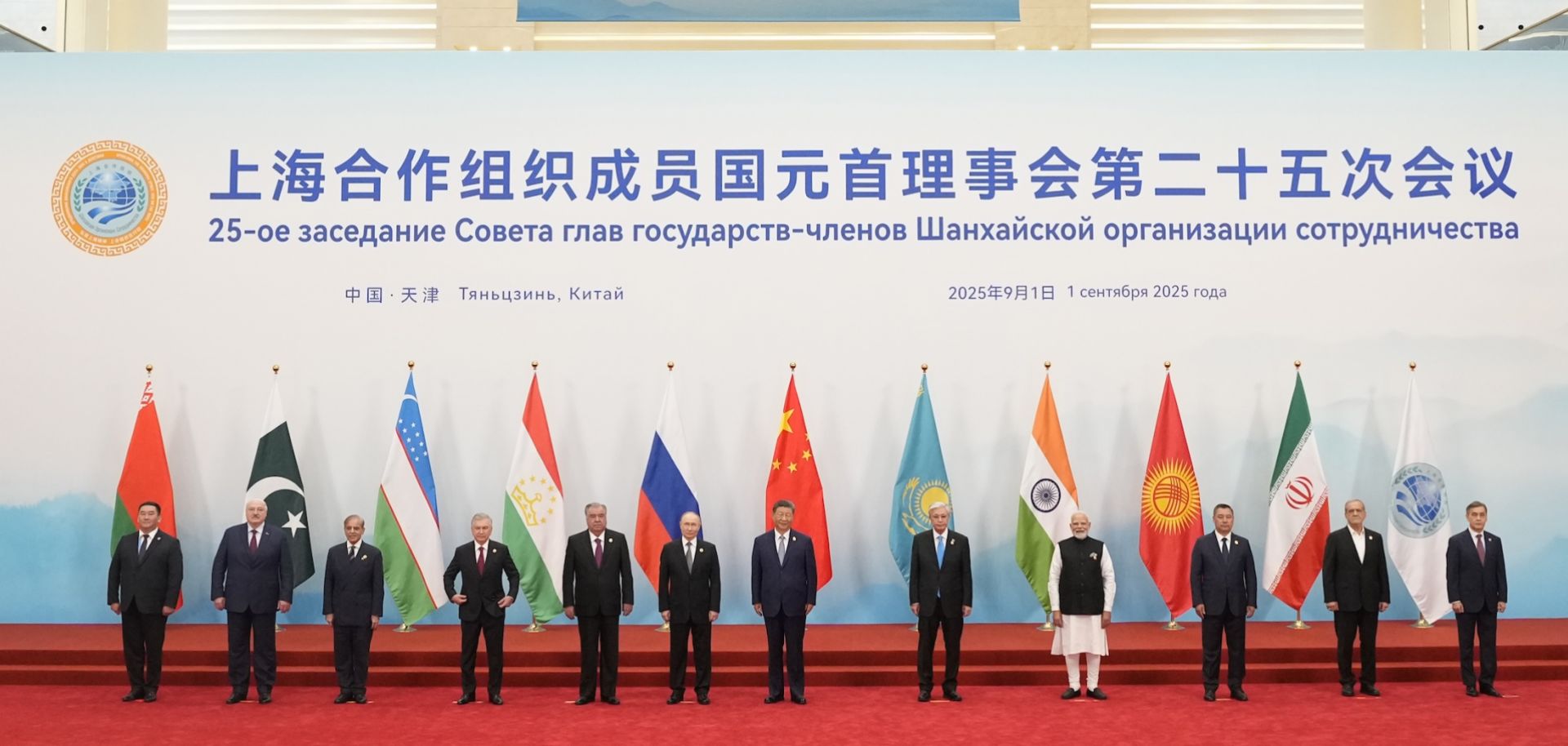
Key takeaways from PM Modi’s SCO Summit address

— The 25th Meeting of the Council of Heads of State of the Shanghai Cooperation Organization (SCO) was held in Tianjin, China, from 31 August to 1 September 2025.

— The SCO declaration condemned the Pahalgam terror attack, which reference was omitted during the defence ministers meeting of SCO in June.

— PM Modi outlined India’s vision and policy regarding SCO. It is built on three pillars that are: 

1. S – Security

2. C – Connectivity

3. O – Opportunity

— Civilisation Dialogue Forum: PM Modi also proposed the formation of a ‘Civilisation Dialogue Forum’ to enhance people-to-people ties in the SCO, stating that this would provide a global platform for the countries to share ancient civilisation, culture, traditions, and literature.

— Global Governance Initiative (GGI): Chinese President Xi Jinping proposed the Global Governance Initiative (GGI) at the SCO plus leaders’ summit as he advocated practising multilateralism.

— Dialogue Partner Status to Lao People’s Democratic Republic: A decision was taken to grant the Lao People’s Democratic Republic the status of SCO Dialogue Partner and to grant SCO Observer status with the Commonwealth of Independent States.

— City of Cholpon-Ata designated “Tourist and Cultural Capital of the SCO” for 2025–2026: In accordance with the Organization’s tradition, the city of Cholpon-Ata in Kyrgyzstan was designated the “Tourist and Cultural Capital of the SCO” for 2025–2026.

— Kyrgyz Republic to host next SCO Summit: The chairmanship for 2025–2026 has passed to the Kyrgyz Republic. The head of Kyrgyzstan named the theme of the Kyrgyz chairmanship as “25 years of the SCO: together for a stable world, development, and prosperity”.
Key takeaways from PM Modi’s SCO Summit address
AI
Aeon IASa year ago

GST 2.0 unveiled: Two-slab structure cleared

— The Goods and Services Tax (GST) Council, in its 56th meeting, cleared the next-generation reforms under the eight-year old indirect tax regime.

— It provided a two-slab structure of 5 per cent and 18 per cent with a demerit rate of 40 per cent rate only for super luxury, sin, and demerit goods.

— Sin goods are the products that are considered harmful to society, which may cause harm to health, or if they are considered harmful by a moral prism.

— All the rate changes, except those for tobacco and tobacco-related products, will come into effect from September 22.

— The GST regime came into force after the Constitutional (122nd Amendment) Bill was passed by both Houses of Parliament in 2016. It came into effect in 2017.

— The President set up the GST Council as a joint forum of the Centre and the states, under Article 279A (1) of the amended Constitution.

GST 2.0 unveiled: Two-slab structure cleared
AI
Aeon IASa year ago

Govt rolls out AI-based app Adi Vaani to translate, preserve tribal languages

1. The Ministry of Tribal Affairs has rolled out the Beta version of ‘Adi Vaani’, an Artificial Intelligence (AI) based translation tool that will serve as a foundation for large language models dedicated to tribal languages.

2. Made using AI and efforts of academicians and educators proficient in tribal languages, the app will translate Hindi and English to tribal languages and vice-versa, and also aims to help digitize and preserve these languages.

3. It was developed by a consortium led by the IIT-Delhi with Birla Institute of Technology and Science-Pilani, IIIT Naya Raipur, in collaboration with tribal research institutes in Jharkhand, Odisha, Madhya Pradesh, Chhattisgarh and Meghalaya.

Govt rolls out AI-based app Adi Vaani to translate, preserve tribal languages
AI
Aeon IASa year ago

What is PM-JANMAN (Pradhan Mantri Janjati Adivasi Nyaya Maha Abhiyan)?

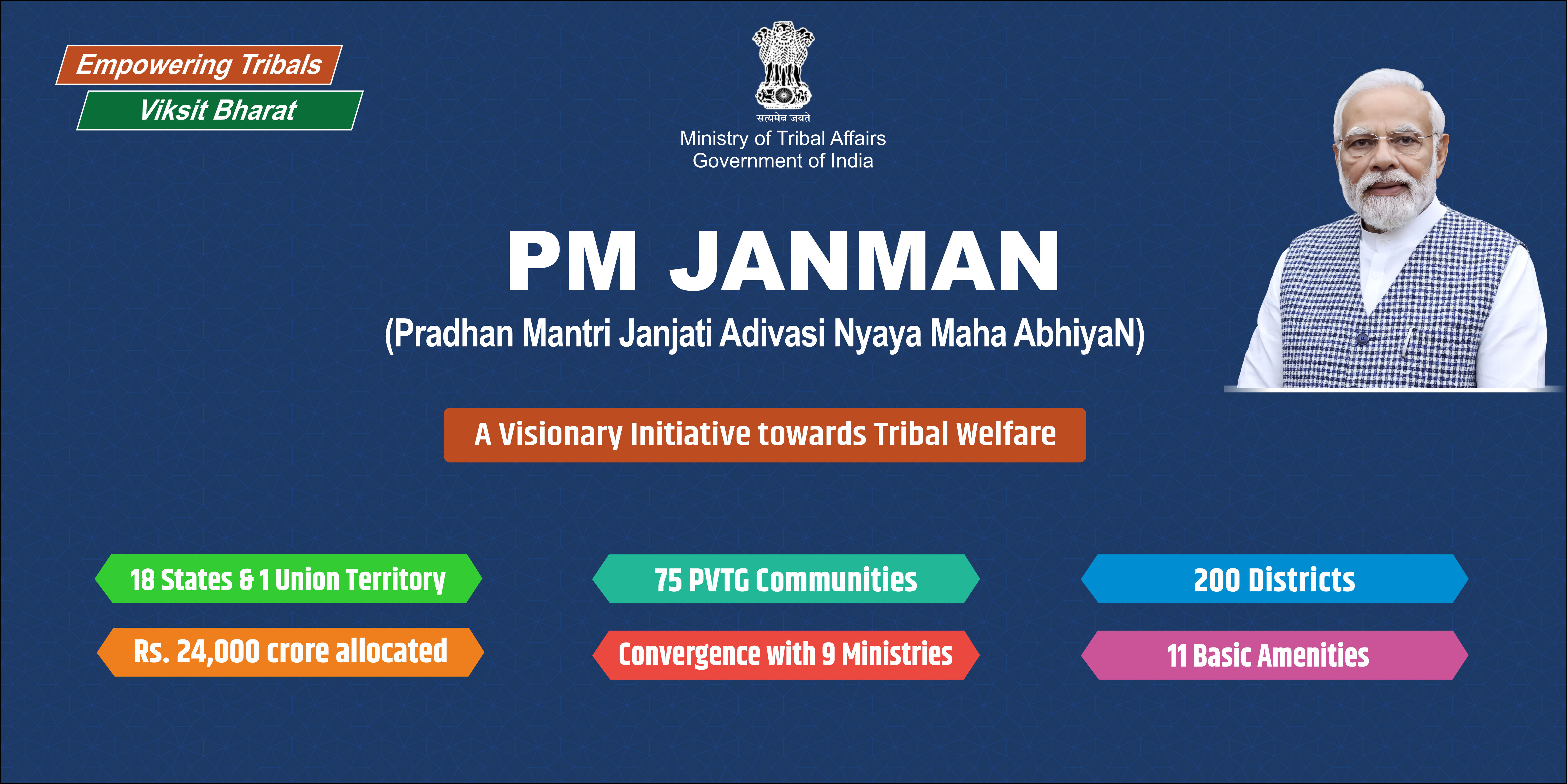
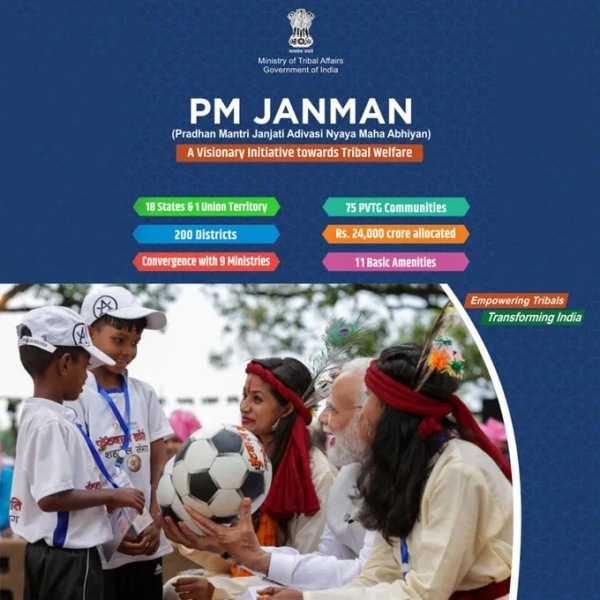
PM-JANMAN is a saturation-based mission for PVTG's upliftment—bridging gaps in housing, health, education, livelihoods, & connectivity.

🔹 Launch date: 15 Nov 2023 (Janjatiya Gaurav Divas)
🔹 Coverage: 75 PVTGs across 18 States + 1 UT (A&N Islands)
🔹 Budget: ₹24,104 Cr (2023-24 to 2025-26)
 • Centre: ₹15,336 Cr
 • States: ₹8,768 Cr

✨ Objective: Inclusive development of PVTGs through 11 interventions across 9 Ministries.

🏠 Housing (PMAY-G)
🛣️ Roads (PMGSY)
🚰 Drinking Water (Jal Jeevan Mission)
🏥 Mobile Health Units (NHM)
👶 Anganwadis & Nutrition
📚 Hostels & Education (Samagra Shiksha)
🌳 Livelihoods (Van Dhan Kendras)
⚡ Electrification (Solar + Grid)
📶 Telecom (Mobile Towers via USOF)
🎓 Skill Development (PMKVY)
🔆 Solar Energy (mini-grids, home lighting)

📍 Ground Impact

1. Malkangiri (Odisha): 125 villages, houses, roads, water, hostels, connectivity.

2. Gumla (Jharkhand): 23 road projects, 1600+ houses, model solar village.

3. Manyam (AP): ₹296 Cr projects, 2,530 houses, hostels, telecom towers.

4. Bihar: 1,308 families, ₹2.39 lakh/family for pucca houses.

5. Odisha (Gajapati): Awareness drives across 345 villages.

What is PM-JANMAN (Pradhan Mantri Janjati Adivasi Nyaya Maha Abhiyan)?
AI
Aeon IASa year ago

What is Particularly Vulnerable Tribal Groups (PVTGs)? and Why it is in the news ?

Why in the news?

In a significant step, the Ministry of Tribal Affairs (MoTA) has asked the Registrar General and Census Commissioner of India (RGI) to consider inclusion of the most marginalised, Particularly Vulnerable Tribal Groups (PVTGs) in the upcoming Census exercise.

Key takeaways:

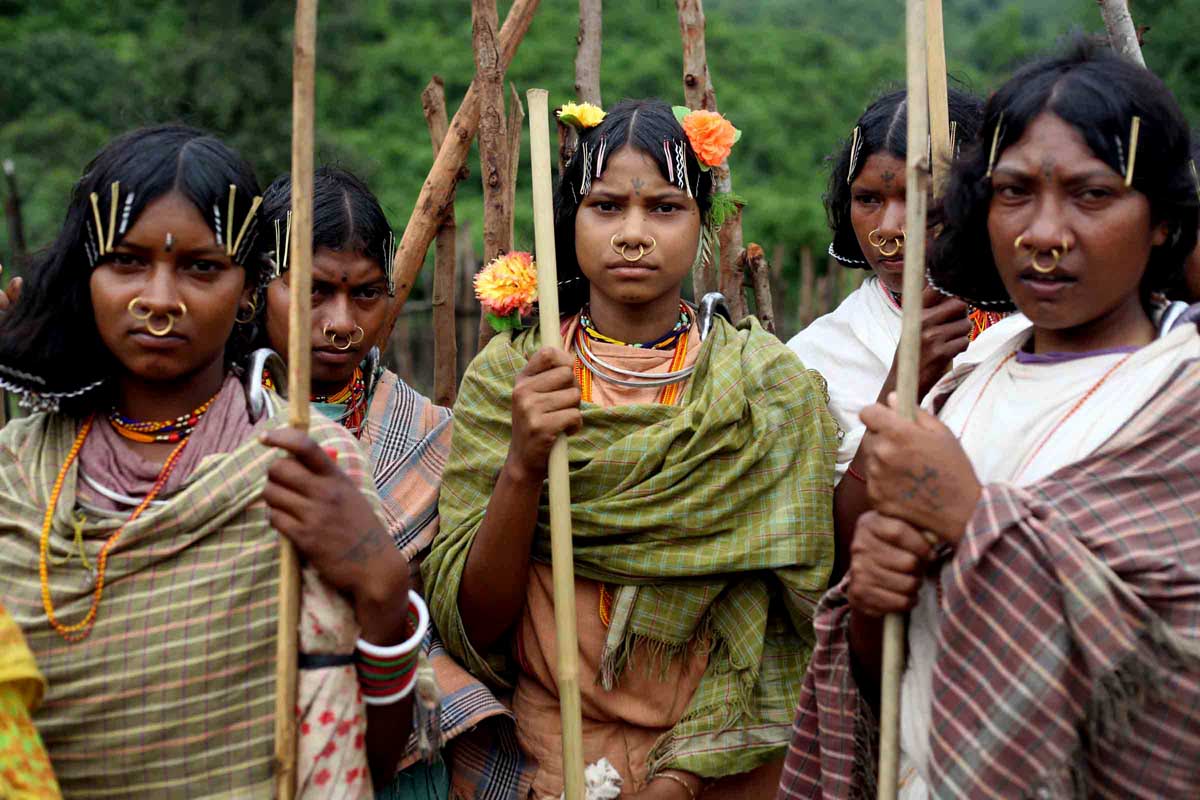
1. If finalised, it would be the first time that PVTGs would be enumerated separately in the Census. There are 75 PVTGs in India across 18 states and one Union Territory (Andaman and Nicobar Islands). They were identified based on low literacy levels, geographical remoteness, pre-agricultural levels, and economic backwardness.

2. Since the 1951 Census, the Scheduled Castes (SCs) and Scheduled Tribes (STs) population figures along with relevant socio-economic and demographic characteristics, have been tabulated and published.

3. They are enumerated strictly as per the lists of SCs and STs notified vide the Constitution (Scheduled Castes) Order 1950 and the Constitution (Scheduled Tribes) Order 1950 in pursuant of the Articles 341 and 342 of the Constitution. The lists of SCs and STs, as amended from time to time, are State /Union Territory specific.

4. In the previous 2011 census, about 40 PVTGs were counted as ‘single entry’ under the broader Scheduled Tribes (STs) category. Professor A B Ota, a retired IAS officer and former director of Tribal Research Institute and Odisha State Tribal Museum, said that the remaining PVTGs, often sub-groups within larger ST communities, are not distinctly enumerated in the Census, leading to a lack of specific data on key demographic indicators.

5. Recent initiatives like the PM-JANMAN (Pradhan Mantri Janjati Adivasi Nyaya Maha Abhiyan) scheme have begun collecting some data on PVTGs. When the scheme was launched, the Centre had said the estimated population of PVTG’s is 28 lakh.

6. However, as per MoTA’s response in Lok Sabha this month, the PVTGs population is estimated to be 45.56 lakh. Madhya Pradesh (12.28 lakh), Maharashtra (6.2 lakh) and Andhra Pradesh (4.9 lakh) are the top three in terms of PVTG population.

PM JANMAN

7. As per the response provided by the MoTA in Lok Sabha in 2016, no survey has been conducted by the ministry to identify PVTG across the country.  According to the ministry, the recommendations of the concerned State Government, along with a complete proposal, are prerequisites to process the proposal for identifying the community as PVTGs in the State.

8. In the response, the MoTA pointed out that “Since Census 2011 figures of RGI covers population data of only 40 PVTGs scheduled as single entry, complete population data of all 75 PVTGs is not available for calculation of complete State-wise percentage of population of PVTGs.”

Why the Census matters

1. PVTGs are severely marginalised due to their isolation, low population, and distinct socio-economic and cultural traits. They struggle with limited access to basic services, social discrimination, and vulnerability to displacement from development and natural disasters. They have little political representation, hindering their participation in decision-making.

2. Enumerating them in the Census will help the government in better allocation of resources, from providing basic infrastructure to education. It will enable governments to deliver targeted welfare and better plans for the future. It will help the judiciary, planners, and scholars alike understand trends in migration, urbanisation, employment, and fertility.

What is Particularly Vulnerable Tribal Groups (PVTGs)? and Why it is in the news ?
AI
Aeon IASa year ago

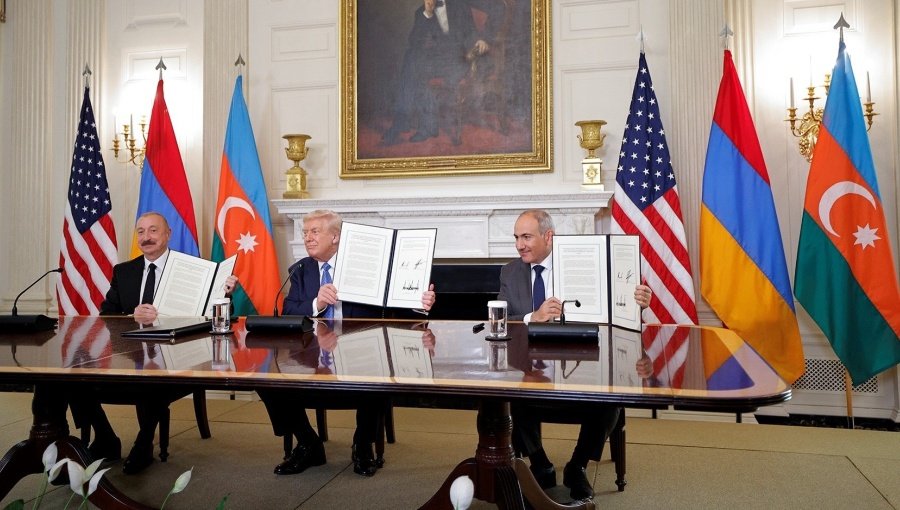
What is Azerbaijan and Armenia peace agreement signed at White House?

Why in the news? 

  • Azerbaijan and Armenia signed a US-brokered peace agreement on Friday during a meeting with US President Donald Trump that would boost bilateral economic ties after decades of conflict and move them toward a full normalization of their relations.

Key Takeaway: 

  • The two countries in the South Caucasus signed agreements with each other and the U.S. that will reopen key transportation routes while allowing the U.S. to seize on Russia’s declining influence in the region. The deal includes an agreement that will create a major transit corridor to be named the Trump Route for International Peace and Prosperity.
  • That route will connect Azerbaijan and its autonomous Nakhchivan exclave, which are separated by a 32-kilometer-wide (20-mile-wide) patch of Armenian territory. The demand from Azerbaijan had held up peace talks in the past.
  • For Azerbaijan, a major producer of oil and gas, the route also provides a more direct link to Turkey and onward to Europe. 

Historical Angle: 


  •  Armenia and Azerbaijan have been at odds since the late 1980s when Nagorno-Karabakh – a mountainous Azerbaijani region that had a mostly ethnic Armenian population – broke away from Azerbaijan with support from Armenia.Both Armenia and Azerbaijan won independence from the Soviet Union in 1991.
  • Azerbaijan took back full control of Nagorno-Karabakh in 2023 in a military offensive, prompting almost all of the territory’s remaining 100,000 Armenians to flee to Armenia.


What is Azerbaijan and Armenia peace agreement signed at White House?
AI
Aeon IASa year ago

Election Commission delists 334 parties for failing to follow norms of registration


  • As per the Act, parties have to give details, including names, addresses and details of office-bearers, during the registration and have to inform the Election Commission if there are changes in the details. The parties will also be delisted if they don’t contest any elections for six years.
  • In an order passed on Saturday, the EC said these 334 parties were “found to be non-existent at their registered address after a physical verification” and had also not contested any elections since 2019.
  • In June, the EC had asked the Chief Electoral Officers (CEO) of states and Union Territories to verify if 345 RUPPs were meeting these conditions. “CEOs conducted enquiries, issued show-cause notices to these Registered Unrecognised Political Parties (RUPPs) and provided each party an opportunity to responded 334 RUPPs, have been found not complying with the above condition,” an EC statement said.

Additional Information related to ECI: 

  • The Election Commission of India (ECI) is a permanent, independent, and constitutional authority responsible for conducting free and fair elections in the Union and the States of India.
  • The ECI is empowered to supervise, oversee, and manage elections to Parliament, state legislatures, and the offices of President and Vice President of India. Since the ECI does not oversee elections to state-level urban bodies like municipalities and panchayats, there is a separate State Election Commission. 
  • The Constitution has the following articles (Articles 324–329) to empower the Election Commission and provide insight into the potential roles and functions of the commission. 
  • Article 324: The superintendence, direction and control of the preparation of the electoral rolls for, and the conduct of, all elections to Parliament and the Legislature of every state and of elections to the offices of President and Vice-President.
  • Article 325: No individual to be excluded from electoral rolls on the basis of religion, race, caste, sex or any of them. 
  • Article 326: Adult suffrage shall be the basis for elections to the House of the People and to the Legislative Assemblies of States.
  • Article 327: Parliament may, according to the provisions of this Constitution, from time to time enact laws with respect to all matters relating to elections to Parliament and Legislative Assemblies of States.
  • Article 328: A state’s Legislature may from time to time by law make provision with respect to all matters relating to, or in connection with, the elections to the House or either House of the Legislature.
  • Article 329: The article prohibits the courts from becoming involved in electoral matters. 


Election Commission delists 334 parties for failing to follow norms of registration
AI
Aeon IASa year ago

What is Cloudburst?

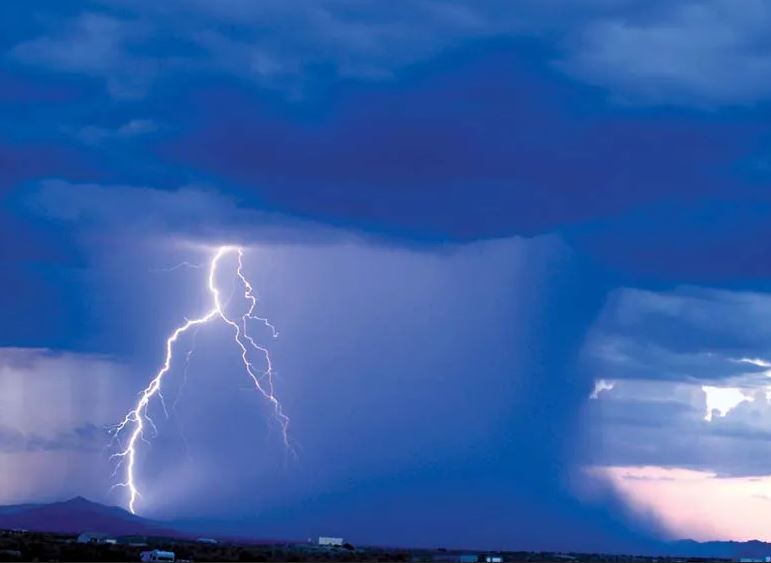
  • A cloudburst is a localised but intense rainfall activity. It is a short-term extreme precipitation that takes place over a small area; it is not, as is sometimes understood, the breaking open of a cloud resulting in the release of huge amounts of water.
  • Cloudbursts have a very specific definition.The India Meteorological Department (IMD) defines cloudburst as unexpected precipitation exceeding 100mm (or 10 cm) per hour over a geographical region of approximately 20 to 30 square km.
  • Significant amounts of rainfall such as this can result in floods.Basically, all instances of cloudbursts involve heavy rain in a short period, but all instances of heavy rain in a short period are not cloudbursts if they do not fit this criterion.
What is Cloudburst?
AI
Aeon IASa year ago

Why there is need for "Global Treaty on Plastic" ?

Why in News?

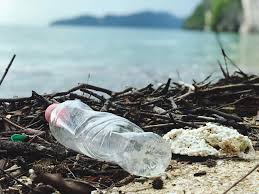
Ministers and negotiators from around the world are currently meeting in Geneva for the second round of the fifth session of the Intergovernmental Negotiating Committee (INC-5) to discuss the terms of a Global Plastics Treaty — a legally binding international agreement to tackle plastic pollution across its entire life cycle.

Lancet Report: Key Concerns

  • Plastic pollution causes over $1.5 trillion in health-related economic losses annually, disproportionately affecting low-income and vulnerable populations.
  • Plastics contain 16,000+ chemicals, many of which are carcinogens, neurotoxicants, and endocrine disruptors.
  • Microplastics and nanoplastics (MNPs) have been detected in human organs and fluids, linked to serious health issues like stroke, heart disease, liver cirrhosis, and lung disorders.

New Global Initiative:

  • The Lancet Countdown on Health and Plastics has been launched to monitor plastic production and health impacts globally, similar to its earlier work on climate change.
  • Led by Philip Landrigan, the Countdown will track health indicators across the plastic life cycle, providing science-based data to shape policies.

Scale of the Problem:

  • Global plastic production surged from 2 million tonnes (1950) to 348 million tonnes (2017); expected to double by 2040.
  • Serious marine pollution, wildlife harm, and now human health threats make plastics a global environmental emergency.

UN & Global Efforts:

  • In March 2022, the United Nations Environment Assembly (UNEA) adopted a resolution to negotiate a legally binding treaty on plastics across their lifecycle — from design, production to waste management.
  • Urgent international cooperation is needed due to:
  1. The global magnitude of the plastic crisis.
  2. The invisible yet widespread health effects through chemical exposure and microplastics.


Why there is need for "Global Treaty on Plastic" ?
AI
Aeon IASa year ago

RBI – Digital Payments Index (DPI)


- RBI released its Digital Payments Index (DPI) for March 2025, which stood at 493.22, up from 465.33 in Sept 2024 and 445.5 in March 2024.
- Growth driven by improvement in Payment Infrastructure (Supply-side) and Payment Performance.
- DPI launched in March 2018 to track digital payment adoption across India.
- Index published semi-annually (since March 2021), with a 4-month lag.
- Measures 5 parameters:
🔹 Payment Enablers – 25%
🔹 Payment Infra (Demand-side) – 10%
🔹 Payment Infra (Supply-side) – 15%
🔹 Payment Performance – 45%
🔹 Consumer Centricity – 5%

RBI – Digital Payments Index (DPI)